


宋锦
Song Brocade (Sòngjǐn) is a treasured silk textile originating from China’s Song Dynasty (960–1279). Renowned for its refined craftsmanship and scholarly elegance, it features intricate patterns inspired by classical landscapes, calligraphy, and nature—delicate floral motifs, geometric designs, and poetic depictions of birds amid blossoms. Its subdued color palette and graceful lines reflect the refined tastes of ancient literati. Before you lies a painting woven from mulberry silk."
During the weaving process, artisans must manually change the weft threads according to ancient pattern manuscripts. Song Brocade demands extraordinary skill, even a master weaver produces only a few centimeters per day. This rarity earned it the name “inch of brocade, inch of gold ” and it is recognized as part of China's intangible cultural heritage.

蜀锦
Shu brocade (Shǔjǐn) originating from the land of abundance in Sichuan, is renowned for its rich colors and intricate patterns. Its weaving techniques can be traced back to the Qin and Han dynasties, with the core method being "warp-patterned weaves complemented by colorful wefts," creating three-dimensional splendor through the interplay of light and shadow.
From clouds, dragons, and phoenixes to flora, fauna, and insects, the magnificence of Shu brocade is the result of artisans' months of unwavering focus—a perfect resonance between hand, eye, mind, and millennia-old craftsmanship.

香云纱
Gambiered CantonSilk(Xiāng yún shā), is a rare gauze fabric treasured in Canton. Woven from mulberry silk and dyed with juice of dye yam and local river mud, it acquires a distinctive deep, luminous black hue. This enigmatic color cannot be achieved through industrial shortcuts-it demands a stringent, labor-intensive ancient process called "three steamings, nine boilings, and eighteen sun-dryings," entirely reliant on artisans' hands. Recognized as China's intangible cultural heritage, each piece of Xiangyunsha often takes months to complete, undergoing over thirty meticulous manual steps. It embodies a collaboration between the craftspeople, sunlight, local climate, and time. As a result, the fabric feels as cool as jade to the touch, flows like drifting clouds when swaying, and rustles softly with every movement, evoking whispers from beyond the clouds.

老缎
Antique satin (Lǎo duàn), a vintage-grade silk fabric from the early 20th century to the end of the 20th century, represents the most exquisite category among traditional "silks and satins." In the old days, only the wealthy and noble could afford to wear Lǎo duàn, as it was a symbol of status and luxury—each piece of this fabric was precious and irreplaceable, with fewer and fewer pieces left over time. Originating in the Tang and Song dynasties and flourishing in the Ming and Qing eras, it was meticulously woven and cherished by the imperial families.
Generations of weavers infused rigorous craftsmanship into every warp and weft, elevating antique satin beyond mere fabric into a subtle yet resilient embodiment of Eastern "reserved elegance." Its surface remains as serene as a moonlit lake, while within lies a wealth of intricate artistry and dynastic grace—revealing profound beauty through understatement.

漳缎
Zhang Satin | A National Intangible Cultural Heritage, it is a pure silk fabric exclusive to the imperial court of the Qing Dynasty, known as "relief on silk". Originating in Zhangzhou during the Yuan Dynasty, it was crafted into a unique silk treasure by Suzhou artisans who integrated satin jacquard and zhuanghua (make-up flower) techniques.Hand-woven with pure silk, it features a core structure of satin base with velvet patterns, combined with the steel wire velvet-cutting process. The velvet patterns are three-dimensional and soft, while the satin surface is smooth and glossy, presenting a unique layered effect of double-sided different luster. The fabric is warm in winter and cool in summer with long-lasting color. Its patterns embody Oriental auspicious symbols such as dragons, pythons and flowers, boasting a delicate and luxurious touch that showcases the exquisite craftsmanship and high-end texture of traditional techniques.
传统纹样
-

Baoxiang flower pattern
The Baoxiang flower is a traditional Chinese auspicious pattern. It is an idealized artistic flower pattern integrating the characteristics of lotus, peony, chrysanthemum and other flowers, and does not exist in nature. Embodying the auspicious meanings of good fortune and completeness, prosperity and splendor, as well as holiness and purity, it is regarded as one of the "Three Treasures of Auspiciousness" in traditional culture.
-

Bada Yun pattern
The Bada Yun pattern is a traditional Chinese geometric filled pattern. Featuring a rice-shaped framework radiating in eight directions as its core characteristic, it has an intricate and gorgeous structure. Taking the meaning of "Bada" (literally "eight directions"), it symbolizes unobstructed access and smooth progress in all directions, and embodies the beautiful implications of auspiciousness, harmony and prosperity.
-

Swastika Pattern
The Swastika Pattern is a traditional Chinese geometric auspicious pattern. Its basic form consists of zigzag lines or hooks extending in the same direction from the four ends of a cross, boasting both dynamic rotational charm and symmetrical stability. Its core symbolizes auspiciousness, boundless virtue, longevity and enduring blessings, as well as eternal solidity and endless vitality.


-

Copper Coin Pattern
The Copper Coin Pattern, modeled on ancient round coins with a square hole in the center, features a basic round-and-square form. It can be used individually or arranged in bilateral/tetragonal continuous layouts, boasting concise geometric beauty and rhythmic charm. Its core symbolizes attracting wealth and treasure, as well as prosperity and good fortune.
-

Interlocking Branch Pattern
The Interlocking Branch Pattern features vines as its framework, arranged in bilateral or tetragonal continuous layouts. It boasts soft and smooth lines, combining winding dynamism with symmetrical stability, and has various variants (e.g., Interlocking Lotus Pattern, Interlocking Peony Pattern). Its core symbolizes endless vitality and continuity, embodying the auspicious implications of prolonged fortune, longevity and eternal prosperity.
-

Cloud Pattern
The Cloud Pattern is based on curves or vortexes, arranged in bilateral or tetragonal continuous layouts. It features soft and elegant lines that combine fluidity with symmetrical beauty, and is often paired with dragons, phoenixes, mythical beasts and flowers, making it suitable for various craft expressions. Its core symbolizes auspiciousness, promotion and propitious energy, embodying the implications of lasting good fortune and rapid career advancement.


Song Brocade Loom


手作包包系列 | Handcrafted Bag Collection
-
琵琶宝相纹宋锦手拿包
Regular price $380.00 CADRegular price


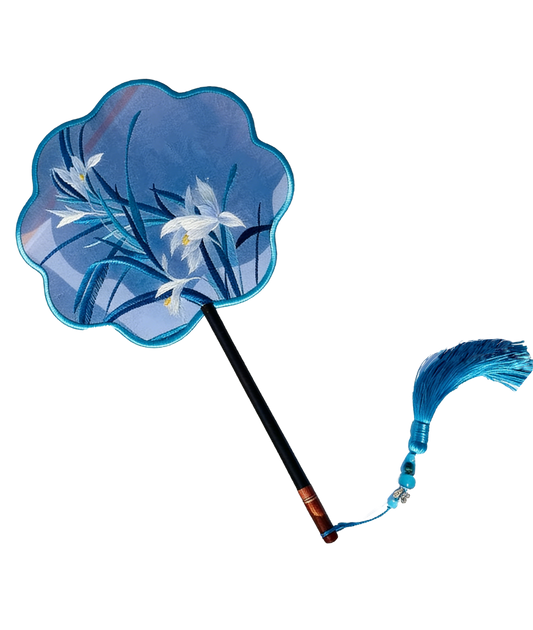
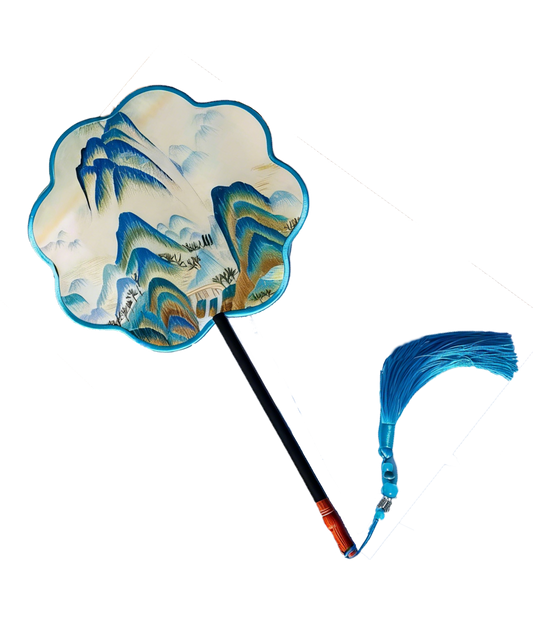
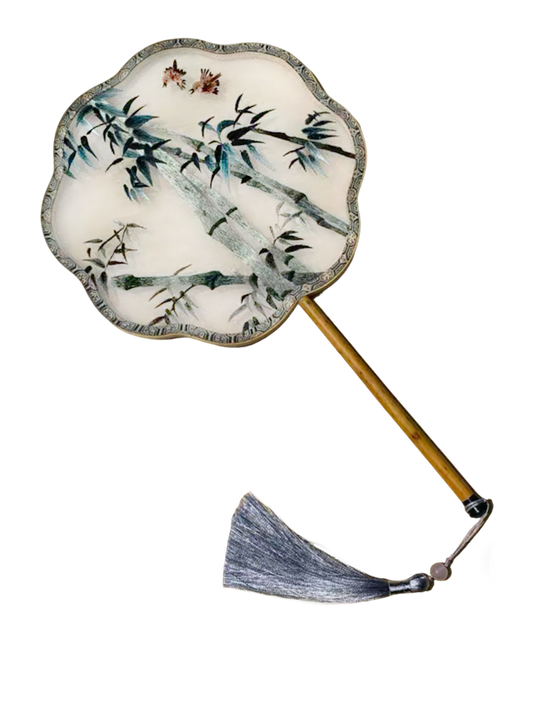
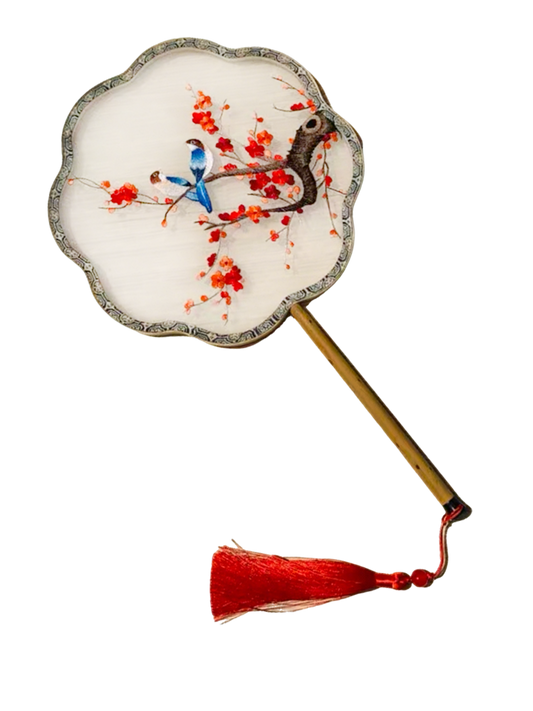
苏韵团芳 | Suzhou Embroidery Round Fan






幸运蝴蝶 | lucky butterfly pendant
-
Dusty blue pink
Regular price $68.00 CADRegular price -
Chartreuse
Regular price $68.00 CADRegular price -
Apricot beige
Regular price $68.00 CADRegular price


马上有钱 | fortune horse
-
peacock green
Regular price $68.00 CADRegular price


锦韵耳饰 | Heritage Brocade Earrings
-
春樱云扇宋锦手工耳环
Regular price $48.00 CADRegular price -
青鸾衔花宋锦手工耳环
Regular price $48.00 CADRegular price -
青釉碎芳宋锦手工耳环
Regular price $48.00 CADRegular price -
云纹四叶宋锦手工耳环
Regular price $48.00 CADRegular price -
朱纹福禄宋锦手工耳环
Regular price $48.00 CADRegular price -
柿柿如意宋锦手工耳环
Regular price $48.00 CADRegular price -
天青织云宋锦手工耳环
Regular price $48.00 CADRegular price -
青釉福禄宋锦手工耳环
Regular price $48.00 CADRegular price -
翠羽衔春宋锦手工耳环
Regular price $48.00 CADRegular price -
宝相织锦宋锦手工耳环
Regular price $48.00 CADRegular price -
朱霞织锦宋锦手工耳环
Regular price $48.00 CADRegular price -
玄金秘纹宋锦手工耳环
Regular price $48.00 CADRegular price -
紫蝶寻香宋锦手工耳环
Regular price $48.00 CADRegular price -
翠蝶栖枝宋锦手工耳环
Regular price $48.00 CADRegular price -
枫染鎏金宋锦手工耳环
Regular price $48.00 CADRegular price


如需定制,请联系主理人
